When I began this blog, I didn't know exactly where I was going. I knew I wanted to talk about secular books from a Christian perspective, and I knew that I had a LOT of opinions. I've been adding content fairly willy-nilly and just trying to find my style and my flow. But it is time to start adding more structure. So I'm starting with three defined goals and I'm publishing them to add in accountability (and honestly guilt) so that I do it.
Goal One:
A new review of a children's or teen novel every Thursday morning. (Morning being defined by West Coast time.)
Goal Two:
A feature on picture books every Monday.
Goal Three:
A index listing page of all reviews alphabetically.
My hope is to start this with a review on Thursday, July 1st. I'm at ALA Annual Convention right now where I've picked up some great Advanced Reader Copies to review. I'll head back home in a couple of days, but I'm doing a lot of reflecting about the state of librarianship, of children's and teen literature, and what I want from my career and this blog in particular.
I know that this blog has very few readers right now, but if you have any suggestions please let me know. And if you know anyone else who could use a Christian perspective on secular literature, please share. Somewhere in here is a goal to really start promoting this blog, but I'm not precisely sure how I want to go about that yet.
Monday, June 28, 2010

Thursday, June 17, 2010
A Tale of an Unknown Country volume 1
One of the biggest trends in graphic novels in the last ten years has been the growth of manga imports from Japan (and manhwa from Korea and manhua from China). These manga books are read right to left and "front" to "back" (in the Western prospective). Many of them are based on anime (Japenese cartoon shows) and are generally known by their large eyed characters. If reading right-to-left completely intimidates you, don't worry, you're not alone. Open the book up from the traditional front and most of the time you'll get a diagram explaining how it works and directing you to the other side of the book. The text is still printed left to right, but you'll read the panels and dialog bubbles right to left. It took me about 3/4ths of the first book to figure it out, but once you get it, it's fun. Promise. In fact what I struggle with most now in manga is telling the characters apart, but I'm working on it. The thing that parents should be wary of is a lot of manga contains graphic violence, nudity, sexual situations, etc. Most manga publishers include an age rating on their manga to help you make a decision..

Book: A Tale of an Unknown Country by Natsuna Kawase
Vital Stats: Published in the US in 2009 by CMX*, 144 pages, black and white throughout
Marketed Toward: Ages 9 to 12
Rating: E for Everyone
The Quick and the Short of It: Recommended for preteens and up, most likely to appeal to girls.
*CMX is the manga imprint of DC comics and is going under this summer. Therefore their titles may soon be hard to get.
Book Synopsis
Rosemarie is the princess of the kingdom of Ardela, a small country that celebrates nature and is primarily tourism based. In fact her country is so poor that she (a princess) sells bread and her brother (the prince) gives tours of the castle to the public (for a fee). Her brother is trying to broker Rosemarie's marriage to Prince Reynol of the nearby science and technology based (and rich) country of Yurinela. (Why yes, I do have my copy of the book right beside me so I can look up how those words are all spelled.) Rosemarie goes in disguise a maid to Yurinela to see what Reynol is like. Though no one is fooled by her disguise, her "meddling" in his life (forcing him to sleep and eat vegetables) causes him to fall in love with her. Apparently his willingness to smile causes her to fall in love with him. (Seriously I could discern no better reason.) Reynol visits her country and after some more shenanigans, they both admit they love each other and the engagement goes on. There are two more volumes in this series that I have not yet read.
At the end of volume one is a bonus standalone story about two teenagers in a school who fall in love. The girl does the announcements and the boy falls in love with her voice. At first she is embarrassed by the crazy stalker, but then she comes to love him as well. (It's short, but trite.)
My Take
Despite occasionally being confused as to who was whom (particularly among the male characters), I enjoyed this book. It was a quick light read and exactly the sort of thing I would have loved as a 10 or 11 year-old girl. She's a princess and she is going to marry a prince, but only if she really loves him. No one's pressuring her into it, her brother turns out to have her best interests at heart. I can see 10 year-old me happily curled up on my pink rose bedspread reading this on a rainy afternoon. This series will have little to no appeal to boys. Often manga series can run into many volumes (40 or 50+ easily) and this one is happily complete in three. All in all it's a good choice for dipping your toes into the manga waters. I will be reading the next two volumes.
Possible Issues/Christian Connection
All of the characters in the book are teens. Rosemarie's marriage negotiations are handled by her (slightly older) brother and Reynol's marriage negotiations are likewise handled by his older brother. (And by handled, I mean the older brothers make the final decision and hold all the power.) Books that depict teenagers falling in forever love and getting married are always slightly worrisome to me. I feel it can send a wrong message and give too much weight to teenage infatuation. While some people marry their high school sweethearts, most teenage relations are ephemeral. Also, where are the parents? Why are there no older adults anywhere in the book? There's no explanation for their absence, they simply don't exist, only teenagers who are close enough to the readers to be relatable, but old enough to act with a degree of independence. Mostly safe for a Christian family.
Marry and have sons and daughters; find wives for your sons and give your daughters in marriage, so that they too may have sons and daughters. Increase in number there; do not decrease. - Jeremiah 29:6
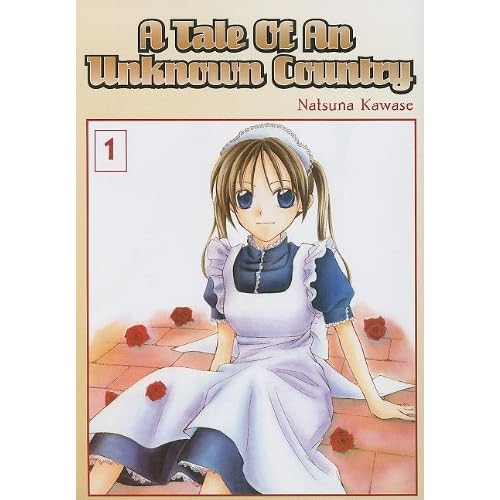
Book: A Tale of an Unknown Country by Natsuna Kawase
Vital Stats: Published in the US in 2009 by CMX*, 144 pages, black and white throughout
Marketed Toward: Ages 9 to 12
Rating: E for Everyone
The Quick and the Short of It: Recommended for preteens and up, most likely to appeal to girls.
*CMX is the manga imprint of DC comics and is going under this summer. Therefore their titles may soon be hard to get.
Book Synopsis
Rosemarie is the princess of the kingdom of Ardela, a small country that celebrates nature and is primarily tourism based. In fact her country is so poor that she (a princess) sells bread and her brother (the prince) gives tours of the castle to the public (for a fee). Her brother is trying to broker Rosemarie's marriage to Prince Reynol of the nearby science and technology based (and rich) country of Yurinela. (Why yes, I do have my copy of the book right beside me so I can look up how those words are all spelled.) Rosemarie goes in disguise a maid to Yurinela to see what Reynol is like. Though no one is fooled by her disguise, her "meddling" in his life (forcing him to sleep and eat vegetables) causes him to fall in love with her. Apparently his willingness to smile causes her to fall in love with him. (Seriously I could discern no better reason.) Reynol visits her country and after some more shenanigans, they both admit they love each other and the engagement goes on. There are two more volumes in this series that I have not yet read.
At the end of volume one is a bonus standalone story about two teenagers in a school who fall in love. The girl does the announcements and the boy falls in love with her voice. At first she is embarrassed by the crazy stalker, but then she comes to love him as well. (It's short, but trite.)
My Take
Despite occasionally being confused as to who was whom (particularly among the male characters), I enjoyed this book. It was a quick light read and exactly the sort of thing I would have loved as a 10 or 11 year-old girl. She's a princess and she is going to marry a prince, but only if she really loves him. No one's pressuring her into it, her brother turns out to have her best interests at heart. I can see 10 year-old me happily curled up on my pink rose bedspread reading this on a rainy afternoon. This series will have little to no appeal to boys. Often manga series can run into many volumes (40 or 50+ easily) and this one is happily complete in three. All in all it's a good choice for dipping your toes into the manga waters. I will be reading the next two volumes.
Possible Issues/Christian Connection
All of the characters in the book are teens. Rosemarie's marriage negotiations are handled by her (slightly older) brother and Reynol's marriage negotiations are likewise handled by his older brother. (And by handled, I mean the older brothers make the final decision and hold all the power.) Books that depict teenagers falling in forever love and getting married are always slightly worrisome to me. I feel it can send a wrong message and give too much weight to teenage infatuation. While some people marry their high school sweethearts, most teenage relations are ephemeral. Also, where are the parents? Why are there no older adults anywhere in the book? There's no explanation for their absence, they simply don't exist, only teenagers who are close enough to the readers to be relatable, but old enough to act with a degree of independence. Mostly safe for a Christian family.
Marry and have sons and daughters; find wives for your sons and give your daughters in marriage, so that they too may have sons and daughters. Increase in number there; do not decrease. - Jeremiah 29:6
Wednesday, June 16, 2010
Binky the Space Cat
It's summer, time to run, to play, and to read light fluff for fun. Perfect season for graphic novels. This is one of my favortie graphic novels from last year (it helps that I'm a cat person) and sure to be a fun summer treat for any beginning reader.

Book: Binky the Space Cat by Ashley Spires
Vital Stats: Published in 2009 by Kids Can Press, 64 pages, full color throughout
Marketed Toward: Ages 6+
The Quick and the Short of it: Highly recommended for kids from beginning readers to beginning chapter book readers
Book Synopsis
Binky would like to be a space cat, but he's never left his space station (family house). As he plots and trains to go into outer space (outside) he continues to battle the aliens (bugs) that occasionally invade his home. He's finally ready to go, he built his spaceship, packed extra kitty litter, grabbed his stuffed mouse, but he realizes something. Can he really leave his humans behind? They need him to stay and protect from the aliens (bugs).
My Take
Love this book! It's colorful and engaging with a lot of jokes that will appeal to kids. Kids love to laugh by feeling superior so they'll chuckle when Binky labels bugs as aliens and the garden as outer space. It has a good balance of sweet, funny, adventure to appeal to both boys and girls, though I expect that it's appeal tops out at about 9 or 10 years old. I highly recommend this for early elementary school students.
Possible Issues/Christian Connection
I see no issues with this book. It might be worth noting (to some) that Binky lives with two humans a mother and son and no mention is ever made of a father or lack thereof. He simply just lives with those two.
I love the house where you live, O LORD,
the place where your glory dwells. - Psalm 26:8
Thursday, June 10, 2010
Geronimo Stilton
The perenially popular Geronimo Stilton is constantly in demand at my library. Originally written in Italy, they're an amazing import for emerging readers. They're perfect beginning chapter books that capture kids who are transitioning from picture books and readers to novels.

Book: Lost Treasure of the Emerald Eye by Geronimo Stilton
Vital Stats: Published in 2004 by Scholastic, 116 pages, full color throughout
Awards:
Marketed Toward: Ages 9 to 12
The Quick and the Short of It: Highly recommended!
Book Synopsis
Geronimo Stilton is harried newspaper man living in a world of mice. He likes cheese and a quiet orderly life. All of that is turned topsy turvy when his sister, Thea, shows up with a treasure map and convinces him to join him on an adventure. They're also joined by their cousin Trap and a stowaway. As they make a brave sea voyage, they might just discover that what they though of as a treasure is different than the treasure they find.
My Take
These books are unbelievably colorful and engaging. Words are often written in a fun color and font in the middle of the text for emphasis. (Think like a comic book with POW being surrounded by a balloon.) Perhaps it's my grownup brain, but it took me about half the book to adjust to that, yet children eat them up. As of this writing none of the copies (and we have many) are available at my library because they're all checked out. Yesterday I had three children ask for these book by name within 90 minutes. They're fun, sweet, adventurous, and wonderful. These are at the top of my list of recommended books in the beginning chapter book range. (So in my opinion, probably works well for kids ages 7 to 10.)
Possible Issues/Christian Connection
I didn't see any issues in this book. Recommending without reservation.
Education Connection
Did you know that I write another blog? It's more geared for professional librarians and covers library programming and issues. One of my favorite programs is a book club for 1st to 3rd graders (age 6 to 9). Here is an entry about when we used this book as our book club choice. I've actually re-done this book club since then and should post an update. You might find some fun ideas to use even at home when your children read the Geronimo Stilton books.
Tuesday, April 27, 2010
Going Bovine
When this book won the Printz Award (like the Newbery but for Young Adult award, the highest one the American Library Association gives for teen literature), I was sitting behind the author's husband. He was so excited, and called his wife. Very sweet. Thus I was excited to go home and read this book.
 Book: Going Bovine by Libba Bray
Vital Stats: Published in 2009 by Delacorte Press, 480 pages
Awards: Printz Award
Marketed Toward: Teens (probably 14+)
The Quick and the Short of It: I wish I could recommend this, but I really can't. It's brilliantly written and engaging, but there are just too many issues.
Book Synopsis
Underachieving 16 year-old Cameron is skating through school, a minimum wage job flipping burgers, and spending a lot of time smoking marijuana. He has distant parents, an overachieving sister, and few friends. Then he starts hallucinating. At first he and everyone else assume it is drug related. However it is soon revealed to be mad cow disease. As he lays dying in a hospital room, he gets a classmate for a roommate, a little person (what used to be called dwarf or midget) named Gonzo. Cameron is recruited by a punk rock angel named Dulcie to save the world and in doing so perhaps himself. Enlisting Gonzo as a sidekick, they set off on a cross country road trip where they join spring break parties, Mardi Gras, cults, fight fire monsters, do more drugs, add a talking gnome who claims to be a viking god to their merry band, and in general have incredible assorted adventures.
My Take
As I said in the intro, this is a extremely well written book. My coworkers all loved it. It was engaging (though I did feel it went on a little bit too long, I had to force myself through the last 70 pages), original, funny, and touching. If you asked me to name four other books like it, I'd be hard pressed to name even two. The Printz Award is supposed to go for excellence and this is excellence by worldly standards. And unlike other award winners, it will appeal to the target audience. It's a good, possibly brilliant, book and I wish I could recommend it.
Possible Issues/Christian Connection
I should have kept a list as I was going because I'm going to miss some issues. We'll start with the drug use, specifically marijuana. This is the third teen book I've read in a row where marijuana use is treated very casually. Did I miss the part where it was legalized? Talking with a coworker, she didn't think it "was that big of a deal". But to me it is still a big deal and the increasingly casual way our society treats marijuana use signals a change in attitude. There is legislation to legalize marijuana in California as I write this, but for now the practice is being normalized in literature.
Cameron also graphically lusts after one of his classmates; there are other sexual activities described and speculated upon, underage drinking, etc. Some questionable language as well. It might be a fairly graphic and accurate look at the world of many teenage books. The question is if you want to read a book that reflects life as many teens live it in the world, or if you want to aim for something higher. There is an argument to be made about knowing enough of popular culture to communicate with the rest of the world, but we also have a responsibility to focus on that which is higher. It might help to reach the right kid in the right situation, but it would have to be done very carefully. And there are quite a few theological issues dealing with the portrayal of angels and the end of the life and afterlife. That is to be expected in a non-Christian book.
Therefore it is necessary to submit to the authorities, not only because of possible punishment but also because of conscience. -Romans 13:5
Thursday, April 1, 2010
Babymouse (Graphic Novel Series) volumes 1 to 3
I've already confessed my love of graphic novels, and now let me further confess that I love all things girly, pink, sparkly, and pretty. I am that girl and I am so without shame. Thus I've been in love with Babymouse since it premiered 5 years and 12 volumes (to date) ago.
 Book: Babymouse: by Jennifer L. Holm and Matthew Holm
volume 1: Babymouse: Queen of the World!
volume 2: Babymouse: Our Hero
volume 3: Babymouse: Beach Babe
Vital Stats: Each volume is around 90 pages, published by Random House, and available in paperback or hardback
Awards: ALA Notable Children's Book Award among others
Marketed Toward: Ages 9 to 12
The Quick and the Short of It: Recommended, with some slight reservations, for anyone second grade and up, but most likely to be enjoyed by girls. (I've never seen a boy in the library so much as pick one of these up, but the girls can't get enough of them.)
Book Synopsis:
These books feature the tale of young Babymouse who loves cupcakes, monster movies, her best friend Wilson the Weasel, and her family. She uses her fantastic imagination and many flights of fancy (frequent daydream sequences have her doing anything from blazing a pioneer trail to fighting giant monsters) to cope with school, Felicia Furrypaws the bully, and the other trials and tribulations of life. The adorable and charming illustrations are done in only three colors: varying shades of black, white, and pink. It sounds limiting, but it is amazing how much is done with something that simple.
Babymouse: Queen of the World!
Babymouse wants to be queen, she wants to be popular, but she is not. The queen is that bully Felicia Furrypaws and when everyone (or so it seems) but Babymouse is invited to Felicia's slumber party, Babymouse is never more aware of her social position. Babymouse obsesses about the slumber party until she has the chance to "earn" an invitation by allowing Felicia to turn in a book report Babymouse wrote and claim it as her own. Despite having made plans with Wilson, Babymouse attends the slumber party only to discover it isn't much fun at all. At the 11th hour, she remembers herself, leaves the slumber party, and rejoins her true friend.
 Babymouse: Our Hero
She dreams of being a hero, but all too often she is just a regular Babymouse. Never has she seemed more ordinary or even awful than in gym class. When a dodgeball game is announced, Babymouse knows that she is doomed to misery, but when the day finally comes (after a week of worry), she surprises everyone (even herself) by firing the winning shot.
Babymouse: Beach Babe
School is over, summer is here, and Babymouse is very excited about her family's vacation to the beach. She has grand plans for surfing (harder than it looks), sunbathing (sunburns), snorkeling (sharks), and much more fun. Unfortunately in her own attempts to have fun, she keeps ignoring her little brother Squeak, finally breaking his heart when she laments her lack of "cool" playmates. Squeak runs away causing a distraught Babymouse to find him. Their vacation ends up being a lot of fun as the two of them play together.
 My Take:
These books are sweet and cute. The moral of the story is transparent (to adults at least) and predictable far in advance, but it is never irritating or cloying. The artwork is charming and the characters extremely likeable. Girls seem to love this series at my library and I love recommending it to them. This is officially marketed at 9 to 12 year-olds, but I really think its appeal is a bit younger than that. I've got only a few reservations (see below) that keep me from giving it whole-hearted review. Let's say that it is four out of five cupcakes (to put it in Babymouse-ese).
Possible Issues of Concern/Christian Connection:
Usually Babymouse learns a good lesson in each of her books (to know your true friends, to be brave, to enjoy playing with your little brother in the first three volumes respectively). The only issues I have are minor. In the second book, Babymouse's winning dodgeball shot hits Felicia Furrypaws directly in the face in what looks like an extremely painful hit, even when rendered in black and white and pink. Ouch! Don't try that at home! And in the third book, Babymouse's beach outfit (though never played for overt sexuality in anyway) is a pair of knee-length board short and a midriff revealing tank top. In one dream sequence in that volume she is a mermaid (err mermouse) wearing a shell bikini top. Other than those two outfits, all other outfits pictured are appropriately modest in the book series.
You Might Also Like:
The Lunch Lady graphic novel series by Jarrett J. Krosoczkais a similar size and shape and uses the same three-tone illustration scheme (only in that case, black, white, and yellow) and features a bevy of lunch ladies who fight evil in various forms. A good guy-friendly option (though still sure to appeal to girls as well).
Better a meal of vegetables where there is love
than a fattened calf with hatred. -Proverbs 15:17
Wednesday, March 24, 2010
The Day-Glo Brothers
From the first moment you see this book with its bright colors against a dark background, it will grab your attention. (My scan of the book does NOT do it justice.) And it's likely to grab the attention of any kids with you as well. Have you ever thought about where fluorescent colors come from? I know I never did before this remarkable book.

Book: The Day-Glo Brothers: the true story of Bob and Joe Switzer's bright ideas and brand-new colors by Chris Barton; illustrated by Tony Persiani
Vital Stats: Published in 2009 by Charlesbridge, 44 pages with black and white and day-glo colored illustrations throughout
Awards: Cybils award, Sibert Honor Book
Marketed Toward: Second to fifth grade, 7 to 10 years-old
The Quick and the Short of It: Highly recommended for elementary students, especially those with an artistic or scientific bent
Book Synopsis:
In non-fiction picture book style (which means vivid illustrations and 1 to 3 paragraphs of text per two page spreadd), this book tells the story of two brothers and some bright ideas starting in the 1930s and continuing through their remarkable lives. The two brothers, Bob and Joe Switzer, are entrepreneurial young men who liked magic tricks, solving problems, and working hard. While trying to make some of his light magic tricks better, Joe recruited his brother Bob recovering from an injury and very bored. Together they started playing with the newly developped black lights and fluorescence for ways to improve the magic strips. One night in their father's pharmacy, they discovered certain bottles would glow. Thus they began mixing up various chemicals, reading up about it, and learning to make glow-in-the-dark paints. they found they were useful not only for magic tricks, but also advertisements, store windows, posters, and more. Eventually of course it would also be used to make reflective strips for airports, ships, and road signs.
My Take:
Apparently no one else had written about the invention of neon colors because the author found no supporting material and did almost all her research from interviewing family members and reading the papers of the Switzer brothers. What a great resource for a historian! (And what a great inspiration for young historians.) The story is simply told, but quite inspiring. At the end there is a nice (but brief) author's note on research and notes on the science of fluorescent lights and day-glo colors.
My favorite (striking) feature of this book is the use of day-glo colors. The pictures begin in black and white and as the brothers invent and perfect the color process, more and more neon colors are introduced.
Possible Issues of Concern/Christian Connection:
I did not see any issues of concern with this book. I really enjoyed how the book talked about the two brothers' different personalities, different workstyles, and how that contributed to their teamwork. How their different strengths allowed them to work more effectiely. I also really appreciated the emphasis on their hard work and persistence, good traits to encourage.
One of the brothers had dreamed of being a doctor and saving lives, while that never happened, the use of his colors on signals has helped to save lives (starting with WWII) as the book points out. The other brother wanted to dazzle crowds as a magician and ended up doing so with his colors. A Christian parent could make a nice point about how our plans and God's plans for our lives may not always be the same, but how He can use us just the same.
For I know the plans I have for you," declares the LORD, "plans to prosper you and not to harm you, plans to give you hope and a future. -Jeremiah 29:11
Subscribe to:
Posts (Atom)

